Document hair color formulas: what colorists should actually record
Learn which details colorists should document in hair color formulas so visits, results, costs, and repeat services stay easy to understand.
Colorists, independent stylists, and small salon teams
12/05/2026, 11:00
A good color formula is more than a mix of color, developer, and grams. It is part of the client history.
For blonding, balayage, glossing, toning, root work, and corrections, the result depends on more than technique. It also depends on whether the next appointment can clearly show what happened last time.
Many colorists still keep formulas in notes, photos, paper cards, chat threads, or memory. That can work until a client returns weeks later, a product line changes, or the result needs to be repeated precisely.
Why document color formulas?
Color services are often repeat services. Clients come back after several weeks or months and expect the result to look similar, or to move forward in a controlled direction.
Without a documented formula, the next appointment starts with guesswork. The colorist has to reconstruct products, grams, developer strength, processing time, hair condition, corrections, and the final result.
A documented formula makes the service more repeatable, easier to explain, and easier to price because the technical record and the service context stay together.
- Which products were used.
- How many grams were mixed.
- Which developer or oxidant was used.
- How long the formula processed.
- What the starting point and target were.
- What should change at the next appointment.
Client and visit context
Every formula should be connected to a client and a real visit. A formula that is saved without context is harder to trust because the hair condition, service goal, and result are missing.
At minimum, record the client, visit date, service type, and a short note about the starting point. For example: root touch-up and glossing, 2 cm regrowth, warm lengths, porous ends.
Starting point of the hair
The same formula can behave differently on different hair. That is why the starting point should be documented next to the mix itself.
Useful notes include natural level, existing color, previous lightening, porosity, hair texture, grey percentage, old color build-up, warmth, unwanted reflects, and the condition of mids and ends.
These details help explain why a formula worked, why it needed adjustment, or why it should not be repeated exactly next time.
Goal of the service
A color formula is judged against a visual goal. The target should be recorded in plain language, not only as product numbers.
Examples include cooler beige blonde, root blend, grey coverage, neutralizing warm lengths, refreshing a gloss, softening balayage contrast, or correcting a result that came out too dark.
When the client returns, the colorist can quickly see whether the same goal still applies or whether the service should move in a new direction.
Products and grams
The most important technical part of the formula is the product list with exact amounts. Notes like "a little 8.1" or "more developer" are difficult to repeat.
A stronger record looks like this: 30 g 7.1 + 15 g 8.13 + 70 g developer 6%.
If products are connected to inventory unit costs, these grams can also support material cost calculation. The formula becomes not only a technical note, but also an operational cost record.
- Color, demi, gloss, toner, or lightener.
- Developer or oxidant strength and amount.
- Bonding, chelating, detox, or treatment products.
- Direct add-ons or consumables when they belong to the service.
Technique and application
The formula alone does not describe the full service. Technique notes make the result easier to understand later.
Record whether the formula was used for roots, lengths, balayage, foilayage, face framing, toner only, root first and lengths later, heat or no heat, and the order of application.
A short example is enough: roots first for 25 minutes, then gloss on mids and ends for 10 minutes.
Result and next adjustment
After the service, record how the result turned out. This is often the most valuable note for the next appointment.
Possible notes include: result as planned, still a little warm, root coverage good, ends more porous than expected, gloss should be cooler next time, or the client wants to go lighter at the next visit.
The goal is not to write a long report. The goal is to save the observation that will save time next time.
Leftover or overmixing note
Color services sometimes use more prepared product than the hair actually needs. One small leftover amount is not dramatic. Repeated leftovers across similar services are a cost signal.
A simple optional note is enough at the beginning. For example: about 15 g color left over; next similar service, mix slightly less.
MixMind treats this as a note. It does not automatically calculate waste analytics and it does not change inventory deduction or margin based on the leftover amount.
Common documentation mistakes
The first common mistake is saving a formula without a client connection. A formula is useful only when it is clear which client, hair condition, and goal it belonged to.
The second mistake is missing gram amounts. This is especially risky for toners, glosses, and corrections where small differences can change the result.
Another mistake is saving the mix but not the result. If the outcome is missing, the next appointment cannot tell whether the formula should be repeated or changed.
Finally, many teams spread formulas across paper, phone notes, photos, spreadsheets, and chats. That makes the right information slow to find when the client is already in the chair.
Example of a useful formula record
Client: Anna M. Visit date: 12/06/2026. Service: root color and glossing. Starting point: natural level 6, about 2 cm regrowth, lengths level 8 and slightly warm. Goal: blend the root and make lengths more neutral beige.
Root formula: 30 g 7.1 + 15 g 8.13 + 70 g developer 6%. Lengths formula: 25 g gloss 9V + 25 g developer. Technique: roots first, then gloss on mids and ends. Processing time: roots 25 minutes, gloss 10 minutes.
Result note: root coverage good, lengths still a little warmer than planned. Next visit: formulate gloss slightly cooler. Leftover: about 10-15 g root mix.
This record is short, but complete enough to make the next visit faster and more consistent.
How MixMind helps
MixMind is built for colorists and small salons that want color formulas, client visits, and material cost to stay in one workflow.
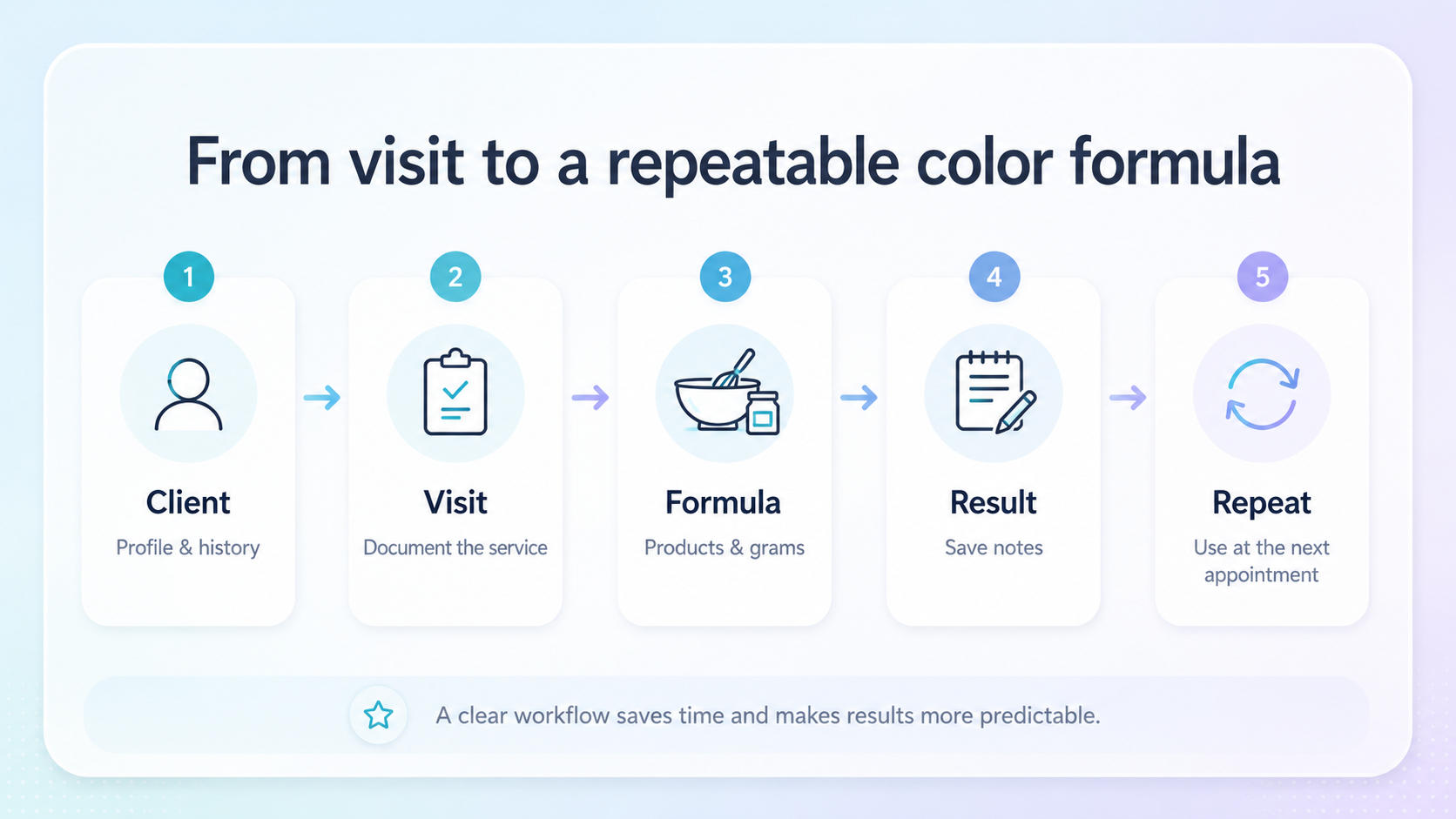
Formulas are not only saved as isolated notes. They can stay connected to the client, visit, products, grams, add-ons, service price, margin, result notes, and optional leftover notes.
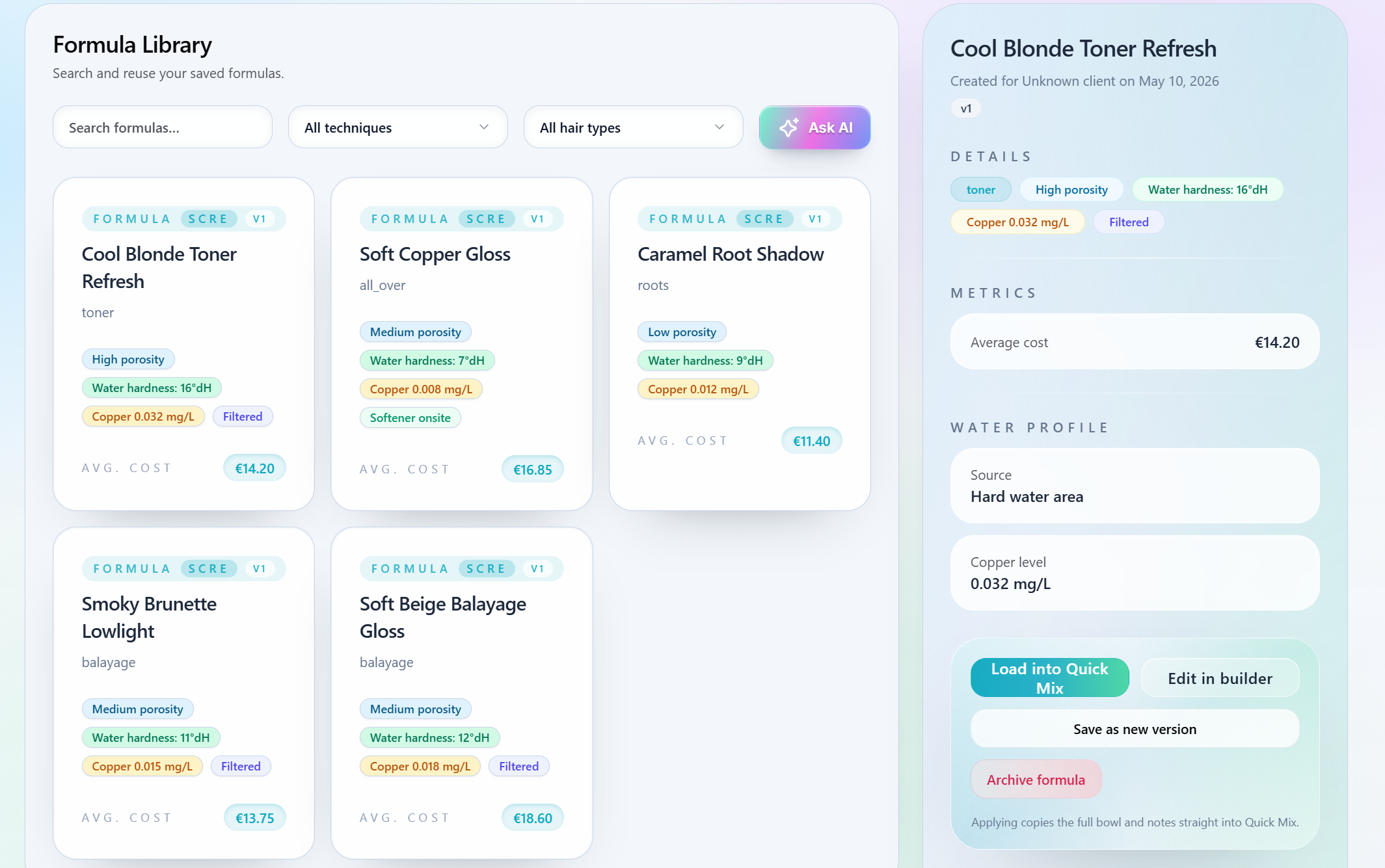
Formula Library helps colorists find saved formulas, edit them, create new versions, and reuse them in Quick Mix when a similar service comes back.
- Save formulas with products and grams.
- Connect formulas to clients and visits.
- Reuse formulas in Quick Mix.
- Keep result notes and next-visit adjustments visible.
- Connect product quantities to material cost and margin.
- Save optional leftover notes without promising automatic waste reports.
Conclusion
A well documented color formula saves time, reduces uncertainty, and makes color services more professionally repeatable.
For colorists, the goal is not only to create a beautiful result. It is also to understand how that result was created, what it cost, and what should happen next time.
MixMind helps colorists and small salons keep formulas, visits, material costs, and notes in one place.
FAQ
Does every formula need a long note?
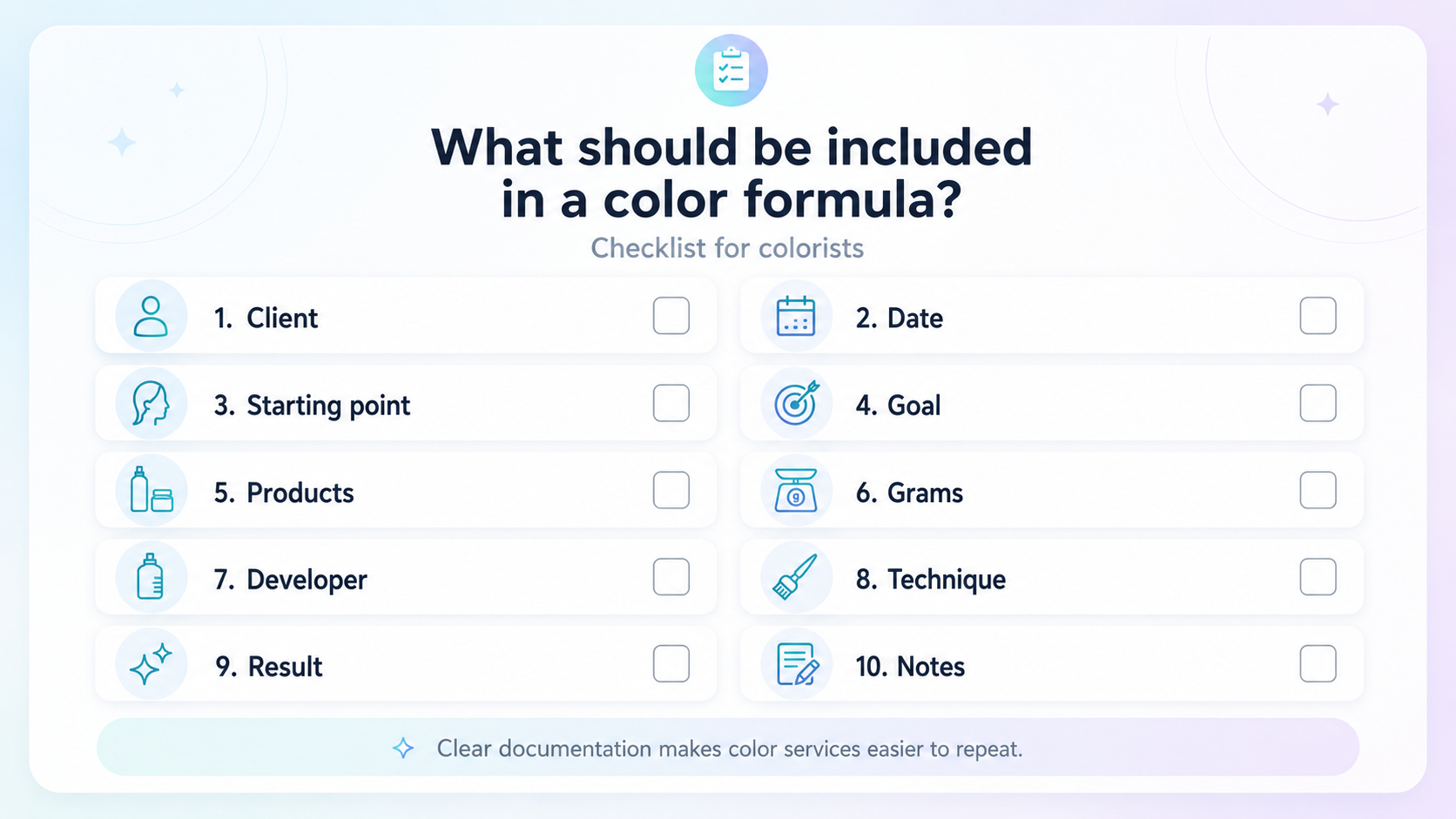
No. The most useful record is short but complete: client, date, starting point, goal, products, grams, developer, technique, result, and next-visit note.
Can MixMind reuse saved formulas?
Yes. Formula Library is designed so saved formulas can be found, edited, versioned, and loaded into Quick Mix when a similar service returns.
Does MixMind automatically calculate waste from leftover notes?
No. Leftover amounts are optional notes. They help spot recurring overmixing, but they do not automatically change inventory, material cost, or margin.